Most banks in the U.S. are community banks. They are facing a rapidly evolving technology landscape and rising nonbank competition as well as the usual economic and regulatory uncertainty. Because of their size, community banks generally rely on third parties, including their core technology providers and fintechs, to support innovation. This reliance brings with it challenges.
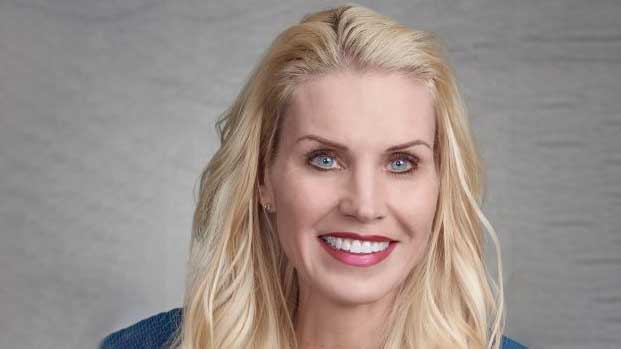
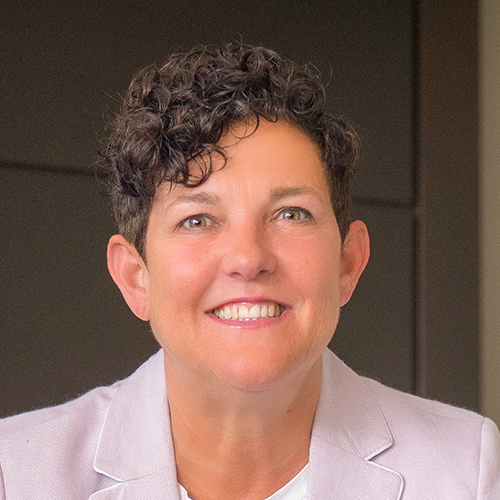
Julieann Thurlow is President and CEO of Reading Cooperative Bank. RCB is mutually owned and has approximately $1.2 billion in assets and 14 full-service branches in eastern Massachusetts.
She has served as the Vice Chair, Chair Elect, and Chair of the American Bankers Association and is regularly on American Banker’s Most Powerful Women in Banking list. She was also a founding of member of Alloy Labs, a consortium formed to facilitate innovation in the banking space.
Julieann also co-chairs Mass Fintech Hub, a unique collaborative focused on cultivating a robust fintech ecosystem in Massachusetts that works to encourage entrepreneurs to establish and grow their fintech startups in the Commonwealth.
Q. Julie, what advantages do you have as a mutual?
A. The mutual advantage is that you can make strategic long-game bets for your community, assuming your Board is willing to go along with it. We were created by our community to meet a financial need in 1886, so we continue to be hyper-focused on community needs, and so our bets could be the five-year process starting during the pandemic to open a branch in Lawrence, Massachusetts. Or the creation of a payments hub that is facilitating PayPal and Venmo payments for small businesses and is now a product that is available to the broader industry. Or the building out of an emergency employee loan. All things that are not traditional banking solutions or things that every bank on Main Street does. But we can do them if we think they are additive to our customers or will improve the financial lives of consumers in our market.
Q. Last year you merged with Wakefield Cooperative Bank. Can we expect further combinations in your future?
A. If another opportunity as perfect for Reading Cooperative Bank as Wakefield Cooperative Bank presents itself, and if it’s a true mutual combination, and not a mutual holding company taking over Reading Cooperative Bank, then we would have to give it serious consideration because we are all about perpetuating the mutual banking model. In the case of Wakefield, we had acquired the two branches of Equitable Cooperative Bank in Lynn and Nahant, and we had our traditional branches which ran from Lawrence to Burlington (north and south along Route 93) and so there was a gap in our market.
The Wakefield opportunity fit neatly into that gap. They weren’t a public company so our combined Boards could evaluate whether or not it was best for our two mutual organizations to have more critical mass and capabilities and capital deployed in similar and adjacent markets. Doing it made sense.
The difference with a mutual is that we are owned by our community, its leaders are here but for a little while as caretakers, not owners. We need to make sure that we continue to have the right leaders who understand their role and can take the organization forward for the next 25 even 50 years, ensuring that the primary focus is the community that it serves. That is, I think, the biggest challenge as a mutual — ensuring that your community understands your difference and the quality and the value that presents economically to the communities that we serve.
Q. Tell me about your involvement with Mass Fintech Hub.
A. It began right before the pandemic. The organization was a conceptualized by Mike Fanning from MassMutual and the then Economic Development Secretary, questioning why fintech was happening on the West Coast and not in Boston, Massachusetts. We have all the freshly educated young minds, strong financial services companies, investors — we have all the conditions that should lend themselves toward innovation in the fintech space.
When we looked around, there was a lot of innovation that was happening but it wasn’t coordinated, and it wasn’t an ecosystem, but there were individual pieces that if brought together could create critical mass and help accelerate things in Boston so that young, innovative minds wouldn’t think they had to go someplace else to have their ideas recognized as relevant.
Q. What is your assessment of the fintech ecosystem in Massachusetts? Strengths and weaknesses? What do we need to get to the next level?
A. There are businesses that are starting in Massachusetts and businesses that are deciding to scale here. There’s a fresh round of investments happening in the fintech space in the Boston area and our universities are supporting that innovation with specialized programs for innovators. We are focusing attention and encouraging local collaboration. We have accelerators, we have the universities, we have investors, and we have innovation happening.
In fact, the generation that is innovating right now, the fresh generation of entrepreneurs that is in our colleges, is very excited. There are fintech programs in our local colleges and universities, whether they be state or private, and when those graduates come out, it is incumbent on our local businesses to hire them.
Lastly, in Massachusetts, we have government leaning into AI, and fintech powered by AI can be the next iteration of innovation that accelerates opportunity here in the Bay State instead of elsewhere.
Q. Are checking accounts still relevant products? Do they need an upgrade?
A. The payment space that we’ve been working in would tell you that they need an upgrade. The next generation of consumers — have a different relationship with their phones and their banks. Wallets have proliferated — you have a wallet for your coffee; you have a wallet for your shopping. All these monies are sitting outside the banking system, on somebody else’s balance sheet. They’re not insured and they’re not coordinated. If you want to make a big purchase, you have to cobble all your wallets together: your Venmo balances, your PayPal balances. (I don’t know if you can get your coffee balance back from Starbucks or not.)
Think about how the next generation behaves. The checking account — Ron Shevlin calls it the paycheck motel — is where your money goes in but then you let everyone come in and scoop up a little bit of it rather than initiating yourself from the wallet that is your checking account. And you certainly don’t write checks anymore.
The way we are imagining that you get and maintain relevancy is by connecting and creating utility back inside the checking account, allowing that checking account to be your payment hub. The worst thing is when you sit down to do your taxes and you’re trying to figure out which expenses were business expenses, or tax deductible, and then you end up scrounging for receipts or trying to figure out what you paid for. But if you had the ability to initiate payments using the rail of your choice from your checking account, you could keep that history inside the checking account.
I’m going to digress a little here, but consumers only care about deposit insurance during a crisis. They really could not care less about the millions of dollars that are sitting inside a retailer’s checking account that actually belongs to them that the retailer is earning interest on, but they become very interested when there is a crisis
Q. You anticipated my next question, which is “what should we do about deposit insurance?”
A. If you haven’t figured it out, I’m a joiner if only because I feel you should have a voice, and you can’t complain if you don’t express your opinion. So, I was asked to join the American Bankers Association Deposit Insurance Task Force and I did.
Depending on the size of your bank, you are going to have a different opinion on deposit insurance. And depending on your average commercial checking account balance, you are also going to have a strong opinion. I do like the recommendation to index deposit insurance to inflation.
But again, when I referred to deposit insurance only being relevant in a crisis, if you increase deposit insurance on non-interest-bearing commercial accounts (which has been one of the proposals) the balances are not going to be there and the cost of deposit insurance is not going to be paid for during the good times. The monies are going to go to a safe account during the bad times, but they’re not going to stay there because businesses are going to expect to be paid for those deposits. When there’s no risk, they want to have the reward. So — and this is Julie’s opinion and not the ABA’s — some of the recommendations benefit one institution to the detriment of another institution. But I don’t believe that is how we should be making public policy.
I think we can better solve the challenge of a crisis by giving very circumspect tools to the regulators much like they had during the last crisis, where you could set a temporary stay to calm the market and avoid volatility; tools could be provided to Treasury or to the supervisory agency or the insurance agency. You don’t need to provide cover for certain types of accounts to the detriment of others.
Let’s be honest. The deposit volatility happened in a few accounts that moved really, really quickly. But now anybody can move money really, really quickly. FedNow was stood up, real time payments are here. As we build utility, that ability to move money quickly in a crisis or if there’s social media consternation, money can move and instability can happen in almost no time.
So, knowing that there are tools to quell volatility, rather than isolating the risk for certain customers, and not all customers — and figuring out what $250,000 should today and into the future. The data hasn’t been parsed to know exactly how much and who is exposed. Because we certainly don’t want to build a framework to protect those who should be protecting themselves and have the wherewithal to be protecting themselves.
Q. What will the branch of the future look like?
A. We still see that consumers do elect to bank at an institution near to them. That’s one reason why you see Chase opening up in New England. And the Chase play in New England is primarily wealth management. The branch is for convenience; it also serves as a billboard for their presence to attract wealth clients in the Northeast. I think the branch will smaller and it needs to be a meeting place and then we need to figure out how to drive activities to it.
There is no reason why you can’t do most banking through your mobile phone or through a video call using an iPad. But there is no way you can build trust through this type of communication, or if you can it’s going to take a lot longer to build a true connection.
The reason we opened a branch in Lawrence, Massachusetts was because we determined there was a need for access to banking products and services and there was only one other community bank there. It made sense for us to go where the need was. That’s why cooperative banks were founded to begin with. But we recognized we needed to be there in person building trust and making sure the community understood the values that underpinned our choice to put a branch in Lawrence. It also helped us understand their needs and create products and services that met them where they were. Community building doesn’t happen electronically.
Q. Does open banking have a future in the U.S.?
A. Will it happen? I think it will happen in the next five years. It doesn’t feel like this administration is there. Their focus seems to be on crypto and stablecoins, less on consumer information.
The cores will control that access and I know they’re thinking about it. When it’s difficult for a bank to connect to an API at their core provider, it will be even harder for a consumer to do so. There are large institutions that write their own code and build their own cores, and smaller institutions on a Fiserv, an FIS, a Jack Henry, or COCC like we are. There are just so many different frameworks that making that information standardized and accessible is going to be the biggest challenge.
Q. What are the top opportunities and challenges your bank faces when it comes to technology?
A. I could say the core. I say that with us as a client of COCC (Connecticut Online Computer Center) which is one of the top ranked cores in the country. They are ranked that for their customer relationships and attempt to be accessible. I use the word “attempt” because even though they were the old Open Solutions, they are still not that open. But they are redeveloping their APIs so that the information is much more accessible.
The biggest challenge we have is our technology road map. We’ve got to have access to our data. We’ve been working for the last 18 months on harnessing all our data because everything is in isolated containers of banking service providers; we are pulling it all together so it’s relatable and accessible; that has been our biggest difficulty. But we’re almost there. Once we have the data system-agnostic, then personalizing and customizing offerings based on the consumer’s needs, wants, and desires is something that becomes possible for us.
Q. How do you organize for innovation at Reading Cooperative Bank?
A. We are one of the founding members of Alloy Labs, which is a consortium of community banks that have come together to innovate. That is something that I drove for our organization because I recognized that bankers think as risk managers — that’s really what we are. We bring in consumer deposits and lend them out and try to manage risk so we have the most reward.
When you introduce technology, there’s always a regulation or a regulator or a consumer protection rule that tells you why you can’t do something. We are thinking instead about all the friction points a consumer has in their relationship with the bank and trying to solve for a better banking experience so the relationship is stickier and we continue to be relevant as a community bank. We brought Alloy Labs and their leadership into our organization to help our folks think and be more innovative.
My MBA is 20 years old. A lot of the new frameworks we talk about around innovation, like minimum viable product and lean startups weren’t even taught. None of us learned them unless we just recently graduated, so we need to constantly be in a state of learning in thinking about how we approach the customer and how we actually build product. From a strategy standpoint, that’s my lens for the organization. And also hiring folks who will embrace innovation.
Sometimes having an innovation officer can allow people in the organization to think they can delegate innovation to someone else and avoid doing it themselves. It’s almost like having a compliance officer. No one wants to be responsible for it so you make the compliance officer responsible for it. Then when you’re not successful or you have a problem, it’s the fault of the compliance officer, not the individual practitioner or the team. That’s a problem. The same thing happens in some institutions with an innovation officer. Someone else is responsible, so the core of the organization never becomes innovative.
Q. What advice do you have for fintech startups that hope to sell their products or services to RCB?
A. Have your ducks in a row and be honest with us. One of my observations is that a fintech founder may have a lot of ideas and plans but they start selling before they’ve been operationalized. We are in an overregulated industry, we can’t take a chance on consumer harm so we are going to make sure everything is where it’s supposed to be. The biggest challenge is when you’ve contracted with someone and they don’t deliver on their promise. Make sure what you’re selling is exactly what you have, that you have all of the documentation in place, and that you have credible people in leadership.
Q. The ABA recently expressed some exasperation with core providers, writing that some “treat APIs as a premium feature rather than baseline infrastructure,” charging banks high fees or imposing long timelines for access to their own customers’ data. This makes it hard for the banks that use these cores to deliver new products and services.
You were Chair of the ABA’s Core Platforms Council at one time. What’s a community bank to do?
A. They could do as we’ve done and move their data outside so it’s replicable and start building their own dataset. Also, we have worked to decouple from our core.
We will always have a core relationship, but we don’t want to always have to ask their permission to do something, rely on their APIs which may not be extensive enough to accomplish what we want or wait in line for our turn. I think we are turning the corner to where you can have your core but also select best-in-breed online providers, mobile providers, and other services and operate in parallel with the core but not dependent on the core.
To your point on the ABA’s comment, the biggest challenge with some of the cores that will remain unnamed, is that they toll the bank every single time they access their data or transact, so it makes innovation unsustainable for the community institution.
Q. Do you have to hire people with different skills in order to be able to orchestrate the data strategy and coordinate the fintech startups you’re working with in order to deliver a seamless experience to your customers?
A. Going back to the benefits of being in the Boston area, there are a lot of young, talented people who have data skills and AI skills who are graduating right now. We are harnessing those skills and giving them opportunities and learning from them. Anyone who has been slow-walking their data strategy is going to look brilliant because AI is allowing you to write code without having as many programmers on staff.
Think about even a core conversion timeline, where mapping of data can now happen through an AI agent in half the time.
Q. That’s not good for core providers that are laggards.
A. No. It’s not. You wouldn’t want to be a core that is stumbling right now because AI will allow other cores to accelerate the number of conversions they can handle. It’s great for banks. They won’t have to wait in line and quality should improve, too.
Q. Is this where AI will have its greatest near-term impact for community banks, or do you expect it to have a greater impact in other areas?
A. There’s a tremendous amount of improvement in operating efficiency that can take place across the banking industry. Internal audit? Compliance? All of those expenses that banks manage? Much of it can be automated or served by agentic AI. That means the banker is only looking at the transactions that are most material, highest risk, or abnormal. A lot of that can happen in an automated and seamless fashion.
Q. How are you thinking about stablecoins? Are any of your customers asking about them or using them?
A. A lot of people are curious. There’s a really good application and significant savings for international payments. What I don’t see is community banks issuing their own stablecoins but rather building a pathway.
We are an investor in Rebolt Financial Technology and are the beta bank. We have built a payment architecture where small businesses can use Venmo and PayPal to make payments. Or, if you’re the recipient, you can supply your routing number and account number and have it deposited in your checking account. (Again, keeping the checking account inside the bank and letting the consumer decide which rail to use.) It has also been built with stablecoins in mind. Not to hold the reserves inside that bank where we would have to collateralize it but to facilitate the transfer of the fiat coin.
Q. The White House’s Council of Economic Advisers recently said that allowing stablecoin rewards would not have much of an impact on either lending or deposits at community banks. What do you think?
A. Bullshit. I watch people do it all the time — they use a credit card for their groceries so they can build up travel rewards, rather than their checking account or their debit card. Rewards do affect behavior. There’s a subset of consumers who see those rewards as their vacation.
Q. Are community banks ready to collect citizenship information from existing customers, a requirement Treasury Secretary Bessent implied is on its way? What will happen to older customers without passports who don’t drive? Are we going to learn what mass debanking really means?
A. I have extreme concerns around the debanking of individuals who are lawfully present in the US who already have bank accounts. A lot of people will end up on Suspicious Activity Reports just because the bank can’t defend who they are. We bank kids in high school before they have driver’s licenses.
You’re also going to push a lot of cash out into the community and create a riskier society. It’s the same conversation we’ve had around legalizing pot and allowing stores of cash to build up in ways that create a security risk for consumers.
Q. As a music major, would you encourage students interested in fintech to explore the liberal arts?
A. The more you are exposed to new and creative ideas the broader your thinking will become. The liberal arts, music, creative writing and other liberal arts programs encourage creative thinking which we need more of to avoid becoming myopic in our thinking.
Q. I’m a big fan of the liberal arts for future entrepreneurs. Particularly today when Claude can do your coding for you.
Are you hiring?
A. We are always hiring. Please look here: https://readingcoop.com/careers)
# # #