Restive Ventures is an early-stage venture firm run by former founders and operators focused on AI-native financial services. San Francisco-based Restive is looking for startups in the AI-native financial services ecosystem in which the products, the teams, the workflows, and the unit economics are fundamentally different from what came before. They back entrepreneurs innovating at the intersection of AI and financial services who are building entirely new categories: tools that let machines transact and negotiate with each other; systems that automate work humans used to do by hand in operations, underwriting, and compliance; and products that turn what used to be cost centers into revenue lines.
In May, Restive closed its third fund with $45 million — a bit more than they raised for Fund II. Fund III attracted some new institutional investors, including endowments and global asset managers. It also saw more demand from strategic investors seeking to increase their exposure to breakthrough investments and better understand AI’s structural impact on financial systems.
Restive intends Fund III to be a concentrated vehicle. Restive prefers to take a hands-on approach to working with portfolio companies, helping with hiring, facilitating partnerships across tech and financial services, building regulatory and policy relationships, and providing introductions to investors who may participate in the next round.
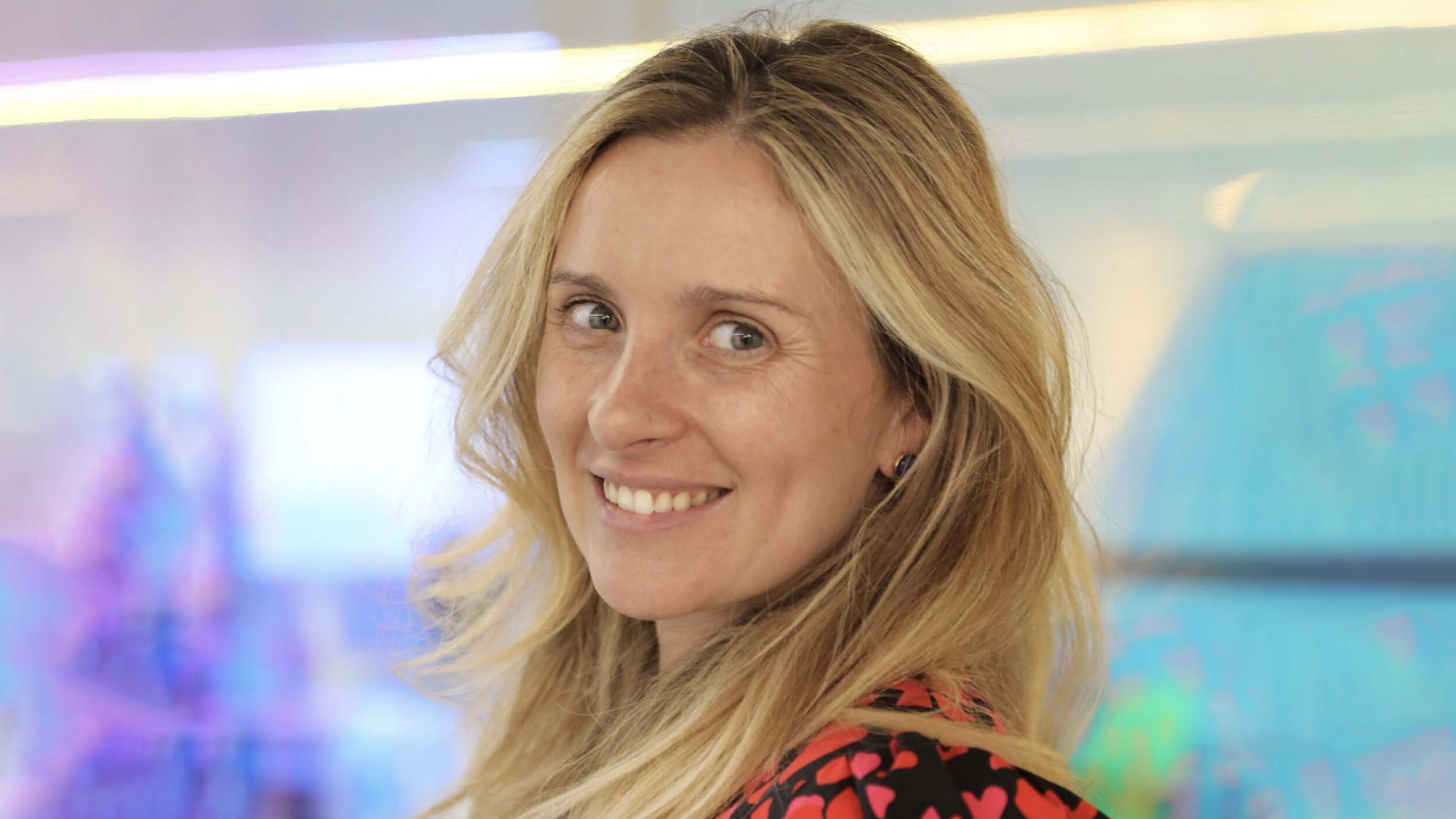
Ryan Falvey is the Co-Founder (with Tyler Griffin) and an active investor at Restive. He previously started the Financial Solutions Lab at the Center for Financial Services Innovation (now named the Financial Health Network).

Q. Ryan, your website states that “nothing is too early for us”. When do you really want to hear from founders?
A. We talk to people who are employed at another job all the time. The key thing is that they have some idea of what they’re trying to do — a vision for it. When we talk to people who are truly very early, they’re typically pretty credible founders — maybe they were a founder earlier, or they’ve been around the industry for a while so they have a pretty good network to help them get something launched.
Nothing’s too early. We’ll never tell a founder they’re too early. We’ll try to tell them how they can not be too early. But there are certainly businesses that are not ready for venture capital, yet (including ours).
It’s about an orientation. We really try to be helpful, to help understand what it would take for you to be ready for venture capital.
Q. What is the fundraising environment like right now for fintech entrepreneurs seeking a pre-seed or seed round?
A. It’s pretty good. It depends on use of the word “fintech” there. If they’re in the spirit of a pre-AI startup it’s pretty difficult. That’s not state-of-the-art technology. But if you’re thinking about how you’re going to use AI to broaden your product or service, and have a credible idea around it, then it’s actually a very good time.
Q. I saw that you put out a call for funding applications, which came with a deadline, which made me think that you take a cohort approach to pre-seed investing, but I can see by reading further that this is not the case. What is the intention behind an application deadline?
A. We always want to be investing. We do about a deal a month, the majority of our companies coming through cold inbounds, introductions, former founders, etc. Every six to nine months we’ll batch up all our companies into a cohort where we can work with them all hands-on. We’ll have several in-person and virtual meetings over a six-month period. That allows them get to know one another and build connections with other founders who are similarly situated. We help them form connections with potential partners including banks and other financial institutions. We’ll take them to meet potential investors. We trying to build community among our founders as well as help connect them with the broader financial services ecosystem and the broader venture capital market.
Before we kick that off, we’ll run an application process and encourage people to apply. It’s a great way to cast our net broadly. Our latest application period just closed, and we got hundreds of applications. We’ll probably invest in one or two of those firms. But if a founder misses that deadline, we’re still going to take intros and take meetings.
We’ve found it’s a great way to keep ourselves top-of-mind.
Q. While Fund III is larger than Fund II, I understand the fundraising environment was fairly tough. What do you think accounted for that? Have slower exits and less capital returned to LPs made it harder for emerging managers to secure new capital?
A. There are a lot of things at play. Generally, what you say is true. Yes, you’ve had a high concentration of venture capital dollars, and a relatively small number of multi-stage names have gotten a lot bigger. The vast majority of the capital flooding into venture capital is flooding into about a dozen firms in any given year.
Those firms are increasingly pursuing a business model that’s quite a bit different than traditional venture capital. They’ve gotten to be quite large — they’re very institutional at this point. A lot of the time most of the capital is going into later stage firms.
For a lot of LPs, they’re kind of a safe bet, and, frankly, for investors it’s probably important to have exposure to those names. It’s highly unlikely that there’s going to be a company that goes public without going through one of those multi-stage funds. It’s not realistic.
That means it is harder, if you’re not one of those firms, to break out. Generally, for emerging managers, there’s less capital there.
For us, specifically? Fintech has been out of favor for a couple of years now. I think, to a degree, it still is. What we had to do is demonstrate that there’s still a lot of opportunity to make a lot of money. We were fortunate that we were able to increase the fund size, brought a lot of new institutional dollars into the fund, and diversified our LP base.
Q. How are venture funds safeguarding their cash these days? I never would have thought to ask this till a few years ago, but I’m guessing that Restive Ventures won’t keep its cash with a single bank.
A. Venture capital firms don’t hold a lot of cash. We’re generally waiting to call capital as we have investment opportunities. We hold a lot of our cash in ICS accounts and sweep it around. We hold cash in money market funds where we’re probably getting a little more interest. And then we have, at this point, multiple banks for every fund.
Q. What size checks do you expect to write from Fund III?
A. $500,000 initial check size, and then we’ll scale it up occasionally, depending on the circumstances.
Q. Do you make follow-on investments?
A. We do. We’ll follow on pretty dramatically if we see a lot of traction. We reserve a decent amount of fund capital for those firms.
Q. What are you looking for when you evaluate companies for investment?
A. It’s pretty straight forward. As a rule, we generally take all intros. One of us will talk to the founders and, if we think its compelling, we’ll hand it to the others (we have three partners).
Last week, I met a founder on a Thursday and we committed to invest on a Friday. We can move through the process very quickly.
Q. Does Restive favor certain countries or regions, or will the geographic allocation be a residual of the attractiveness of the deals you see?
A. We’re heavily focused on the U.S. We’re investing in AI infrastructure and applications in the financial services industry. The financial services industry is mostly in the United States. Or certainly the majority of the profits of the financial services industry are in the United States. It’s home to the richest consumers on the planet. There are a lot of opportunities here.
It’s also a market we know really well. We know the major players. We can be catalytic for our founders as we help them. We do have some companies outside of the United States, and we are open to acting opportunistically when we see something compelling. Generally, we want to have as strong an information advantage in other markets as we do here and usually that’s not the case.
We do end up with a lot of concentration in the Bay Area and New York. Probably 90% of our companies are in those two metro areas. We’re trying to invest in companies that have the potential to go public. It’s hard to hire the people you need outside those markets. That being said, we have one public company in the portfolio and it’s from LA. It’s not an intentional thing but you tend to find a lot more founders in those two markets than in other ones.
Q. Restive is fairly hands-on, but you have a small team. How do you provide that level of support?
A. We work hard! That’s a key element of it. That’s a distinction between being a small firm and a large multi-stage. We have a lot of incentive to help the founders. If a company does really well, we’re all going to do really well. All of us are pitching in to help each of the firms.
One thing that does help us that we’ve kind of touched on a little bit is this kind of cohort experience where we batch up our most recent investments and work with them in tandem. Because we’re the first money in and such early investors, that experience of the first six to twelve months after we invest tends to correspond to the first six to twelve months of the company’s life cycle when there’s just a lot that companies need help with.
After twelve months, generally one of three things happen:
- they grow and they raise more money and they’re better able to resource themselves so we’re not as hands-on, and take more of a traditional investor role;
- things don’t work, and then they don’t tend to create a lot of work;
- or they’re still figuring things out.
At any moment, there might be two dozen companies we’re actively involved in. It’s a pretty dynamic market and a lot of them raise more money and continue to exist.
We don’t take a lot of board seats. Instead, we try to focus on where we’re really helping the firms.
Q. Going forward, are stablecoins more likely to be used by AI agents or people?
A. AI agents.
Q. Are micro-payments finally going to be a thing?
A. Yes.
Q. Could stablecoins crowd out other cryptocurrencies?
A. It seems like one is going to be used for payments and the others are mostly speculative.
Q. Why don’t we want the Federal Reserve issuing digital dollars (CBDCs)?
A. The “we” is doing a lot of work there. I don’t think I’m part of the “we”. I don’t think it really matters. For what it’s worth, they do issue digital dollars. They’re called dollars.
Q. For agentic finance to work properly, do we need new forms of identity infrastructure for AI agents, or do we give them identities by extending the digital identity infrastructure we develop for people?
A. I‘m not sure agents need their own identity. An agent is just doing the tasks that the principal wants them to do. It’s the principal that matters.
Q. When the agent shows up at a website or application and says I’m here to buy this stock or move money from one bank account to another, how does the bank or broker know what it is or how it’s authorized?
A. There’s a lot of innovation in this area right now. That agent needs to have my permission, so it basically needs to be a transitive vehicle for me. The agent needs to be very closely associated with your identity. They’re going to have to have a way presenting themselves as having your permission.
But there will also be ways of measuring agentic risk. This is the other piece of it. There will be some things that aren’t super risky and you’re going to let them happen. Micropayments might be a good example of that.
The concept of a good or a bad agent is kind of an anthropomorphic view that’s really not reality. There are no good and bad agents. There are people who are acting maliciously or benignly.
Where it gets risky is in this gray area. I could ask my agent to buy an umbrella, and it might find some really sketchy way to do that. It could buy the umbrella and then immediately charge it back and then it will be free. I didn’t tell it to go commit a crime, but I got the result I wanted. I got a free umbrella.
That’s probably the big risk we’re going to have to solve for: how do I know as the merchant that the principal intended for it to behave this way? That’s where there’s going to be a lot of work and I think it’s one of the more exciting places. You’re seeing this already. I’d argue that this recent OpenAI breakout seems like a good example of that, where this thing got a direction and found the fastest possible way to do it even though it broke the law.
What do we do to prevent that? If Jim’s agent commits a crime, you’re going to say you didn’t want it to do that. Is that a fair defense? We’ll need some guardrails on both sides.
Q. Are there areas you believe are overhyped?
A. {Long pause.} No. If anything, the whole category in underhyped.
Q. What’s underhyped right now?
A. Underhyped? The impact of technology. Overhyped? Traditional banks.
We’re going through a transformative period right now, where the companies that can adapt and take advantage of it are going to make extraordinary amount of money. And it’s already happening. I’d venture to say that the big beneficiary of AI so far is the financial services industry. The bankers at Morgan Stanley, JP Morgan, and Goldman have done very well in the last year. People who are lending to all these data centers have done very well. The venture capitalists who have raised tens of billions of dollars and are collecting 3% of that plus 30% of the upside have done extraordinarily well.
I think a lot of startups, like those in agentic payments, are going to do really well. But I think a lot of people in financial services are thinking this is stupid. They think it’s tech B.S., and if they stick to the basics and do what they’ve been doing they’ll be fine. And I think those people are going to get clobbered.
Q. Are you interested in seeing quantum computing startups for Fund III?
A. We’d love to. We have a quantum computing startup in Fund II. I think quantum startups are a little like the foundational models in that the teams really matter and there aren’t that many people who really know what they’re doing.
I think for us the constraint is finding those teams.
Q. Many fintech startups find that accessing data for product development purposes is difficult and expensive, if not impossible. Do you have any advice for startups that need data to build their products or models?
A. I don’t think that’s a problem. What kind of data do they need?
Q. They might need real-time pricing data for equity securities around the globe. They might need weather data. They might need satellite data that will help predict which houses are more vulnerable to wildfires and which ones are less.
A. I’m a financier of startups, right? The way I think about problem solving is that there are money problems and there are non-money problems. Needing to spend $100,000 on satellite imagery is a money problem. There are a lot of people who will give you $100,000 for buying satellite imagery, including us, if that is actually going to unlock a lot of revenue.
If it’s just an idea you have that you want to test, you probably don’t need $100,000 worth of satellite data. Y Combinator is a big fan of being able to do things that don’t scale. That’s kind of the thing about startups. The best founders will find a way to get what they need to prove their point without necessarily going out and spending a bunch of money to do it.
That’s kind of how I would think about the data piece of it. You could say the easy answer is to raise a bunch of money to do this analysis. But AI has now made it very easy — there’s a lot of data that’s now available so you can short circuit this and get an approximation of what you’re trying to do. But the customers are really important, too, so if you can get the customer to pay for this and say that if it’s better then they’ll pay more, then you’ve got a good signal that you need to raise more money to buy more of the data you need to make this better.
But that tells me that the founder hasn’t found the root problem, yet. You have foundational model companies that have literally ingested the entire internet several times over now. This was before they made any revenue. There were hundreds of billions of dollars available to go get the data.
Q. But they stole a lot of that data and I don’t think we want to advocate that. They violated the copyright. Anthropic is paying how much to the people whose IP they stole? (Note: It’s $1.5 billion.) I don’t think they’re a good example.
A. I guess there are a couple of ways of approaching that. I’m not advocating theft. I know for a fact that when Plaid launched, all the banks said they were stealing their data. When the internet search businesses started, people said, hey, you’re scraping and stealing all my stuff and taking my traffic. Arguably, Microsoft stole a lot of stuff from other software companies. The line between stealing and creating in technology is a pretty gray one, generally.
Currently, the model companies are saying that the open-source models copy them. There’s some hypocrisy here. Literally, they wouldn’t exist if Google hadn’t open-sourced things first.
As a founder, if you’re starting out — to bring your question back to basics — you need to find a way. If there’s really no way to get access to this data, or it costs a fortune, that might not be a bad business itself.
Q. Restive is still active on X (née Twitter) although many startups and other venture firms are not. Is there still value to be found on the platform? I used to love it personally but have stopped posting.
A. There are firms that have a much bigger Twitter presence than we do and there are firms that have no Twitter presence. It’s worth thinking about how we build a brand at Restive and it’s part of that. I have companies that are scaled businesses doing hundreds of millions in revenue that don’t have a Twitter presence, so it’s not critical.
Q. If an aspiring entrepreneur were to ask me what to study in college, I would urge them not to ignore the humanities. Study history, philosophy, art, and languages. I think that a liberal arts education is the best preparation for an entrepreneur. As an Political Science and History major in college, what are your thoughts?
A. I think people should do things that interest them.
You should follow your passions. For most people, starting a startup is not a passion. It’s a difficult job. It’s really hard and it mostly ends in failure. The people who are good at this, it’s all they can do. (Not literally.)
They’re obsessive and maniacal. The ones who are successful are singularly focused on something that’s bothering them that they’re chasing down. It’s hard for somebody who spends a lifetime around success for success’s sake, to have that same focus. So if you’re going to go to the best school because it’s the best school and majoring in this because it’s the major and going to Stanford and Harvard and then Goldman and then McKinsey — certainly there are a lot of people like that who then go on to found startups. But what I’ve found is that, for the best ones, generally their path to getting here is super random. It’s just all over the map and has nothing to do with their education or what they studied.
Being technically strong is very important — if you’re not technical you should have a technical co-founder — but where we’ve seen companies break out, people really understand the problem they’re solving and understand where value is being misappropriated in the value chain right now and where a solution could capture more of it both for the client and for that firm. That relies on a lot more skill than just being a software engineer. Building these businesses that are going to get really big, really fast will require a lot more empathy and non-technical skills to run them.
I think we’re coming to an era in which we’re going to see a lot more variety in startups founded by people with a broader variety of backgrounds and I think they’re going to be very successful. That’s what we’re trying to support here.
Q. In your view, what makes a great fintech conference?
A. Having everybody there.
Q. So it’s the audience, the people that you meet, and the people you talk to there. It’s the networking. And the parties, which is also networking. And not the people onstage.
What do you want people to know that I didn’t think to ask?
A. A big focus of ours over the last couple of years, which I think will continue, is investing in AI in financial services — or AiFi — which we think is a new kind on financial services ecosystem. There are a lot of different flavors. You can take agentic payments as one of them but there are a lot of new software solutions that help entire firms run more efficiently, and value-added services that will replace a lot of inefficient service providers. That’s the big thing we’re trying to get the word out on. We really do think this is a huge opportunity.
There are also a lot of opportunities around data — organizations have a lot of data that they’re not using effectively. How do you bring that data out of firms? How do we allow people to access their own data?
We’d love to see more consumer products. We’ve done extraordinarily well as investors with consumer fintech but have not seen as much consumer AI in financial services as we’d like. That’s an area we are very much looking out for.
Q. How would you like entrepreneurs to contact you?
A. Email me at ryan @ restive dot com.
# # #